
Riding two-up: simple rules for the rider and the passenger
20 Oct 2026 · 6 min read
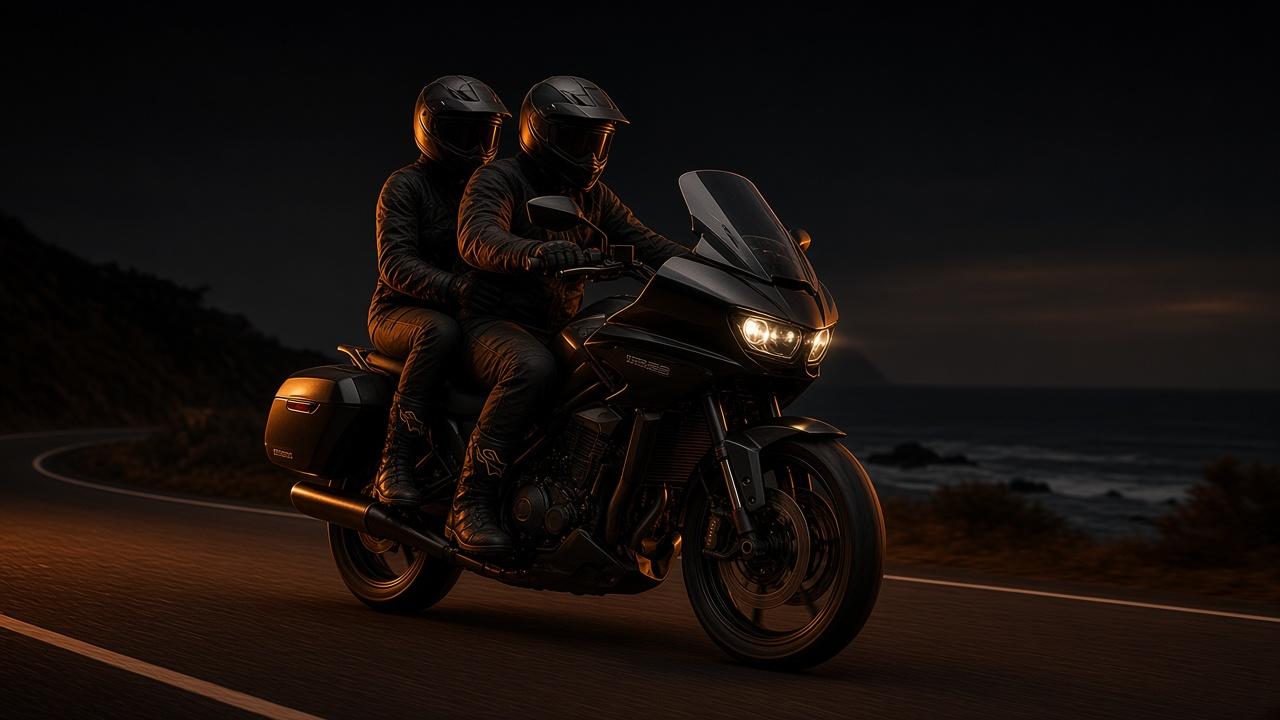
Riding two-up is fun. But a motorcycle with a passenger is heavier, takes longer to stop and turns more slowly. Here is a short guide to a calm ride for both of you.
1. What the law says in Estonia. The passenger must wear a fastened motorcycle helmet. You may not carry a child under 12 on the rear seat. The rider needs a category A licence and zero alcohol. You need your licence, the registration certificate and insurance with you. If the motorcycle is not yours, you also need a power of attorney. The passenger may sit only on the seat provided for them. For mopeds footrests are required outright. No such line was found for motorcycles (not confirmed), so check the registration document that the motorcycle is made for two. A lower age limit for a passenger older than 12 was not found in the sources. For teenagers use common sense: their feet should reach the footrests, and the gear should fit.
2. The passenger’s gear. A passenger falls just as hard as the rider, so dress them just as seriously. A helmet that fits, with the strap fastened. The Transport Administration recommends a helmet that protects the chin. A motorcycle jacket with protection at the shoulders, elbows and back: an ordinary windbreaker will tear at once if you slide. Motorcycle gloves and motorcycle trousers, or jeans with protection. Closed high shoes with a stiff sole, no flip-flops or trainers. Bright clothes or a reflective vest. Take off scarves, long straps and bags that can swing.
3. How to get on and off. The rider starts the motorcycle and holds it upright with both hands and both feet. The passenger waits for the word “Get on”. They put a foot on the footrest and sit behind, usually from the left, swinging a leg over carefully without hitting the rider. Both feet go on the footrests at once, and they take hold of a support. Getting off is the same: only after the word “You can” and when the motorcycle has stopped. Before the first ride, practise getting on and off while standing still.
4. Where to hold on, and how to sit. Hold the strap or the handles behind you, or, if there are none, the rider’s belt or jacket. Both feet stay on the footrests, knees against the tank. Look over the rider’s shoulder in the direction of the corner, but do not turn your head sharply. Sit relaxed and upright, without a death grip. Do not wave, do not take photos while moving and do not twist around on the seat.
5. Corners. The main rule: the passenger leans with the rider, not against them. Do not try to “stay upright” in a corner. That is the most common mistake beginners make. Do not lean more than the rider, just follow them. If you are scared, do not close your eyes. Look over the rider’s shoulder in the direction of the corner. For the rider: enter the corner more slowly than when you ride alone, and do not lean the motorcycle to the limit.
6. Signals between rider and passenger. Helmets muffle the voice, so agree the signs before you set off. These are practical suggestions. No official signal system was found. A tap on the rider’s shoulder: “Stop”. Two taps: “All good”. A tap and a point to the side: “I need a break”. A nod, or a short blip of the throttle from the rider before moving off: “Hold on, we are going”. If the helmets have an intercom, use it.
7. Suspension and tyres. Tyre pressure for two people often needs to be higher, especially in the rear wheel. Look up the exact figures in your model’s manual, and check them on cold tyres. The rear suspension is usually tightened by increasing the spring preload. With a passenger the headlight shines higher, so adjust it if it can be adjusted. Before the ride, check the chain and the brakes.
8. Braking and distance. With a passenger the motorcycle takes longer to stop, so leave extra distance. Brake early and smoothly, or the passenger will be thrown forward and hit you with their helmet. Before braking, the passenger should brace their feet on the footrests and hold on. Choose a lower speed than usual, especially on a wet road. The limits of 50 km/h in a built-up area and 90 km/h outside one stay the same.
9. Smooth control. Use the throttle and the clutch without jerks. Change gear smoothly. Look far ahead so you do not have to brake or swerve sharply. Make the first rides on empty roads. Take a break every hour or hour and a half. The passenger gets tired.
Checklist before you leave. Documents: a category A licence, registration, insurance, and a power of attorney if needed. The motorcycle is made for two. The passenger’s gear: a helmet that fits and is fastened, a jacket, gloves, trousers, closed shoes, nothing hanging loose. The motorcycle: pressure set for two, suspension tightened, headlight adjusted, brakes and chain in order. What you agreed: how you get on and off, which signals, the passenger leans with the rider, the rider is sober.
Id no. 40·…