
A motorcycle in winter: can you ride, and how to prepare
27 Oct 2026 · 6 min read
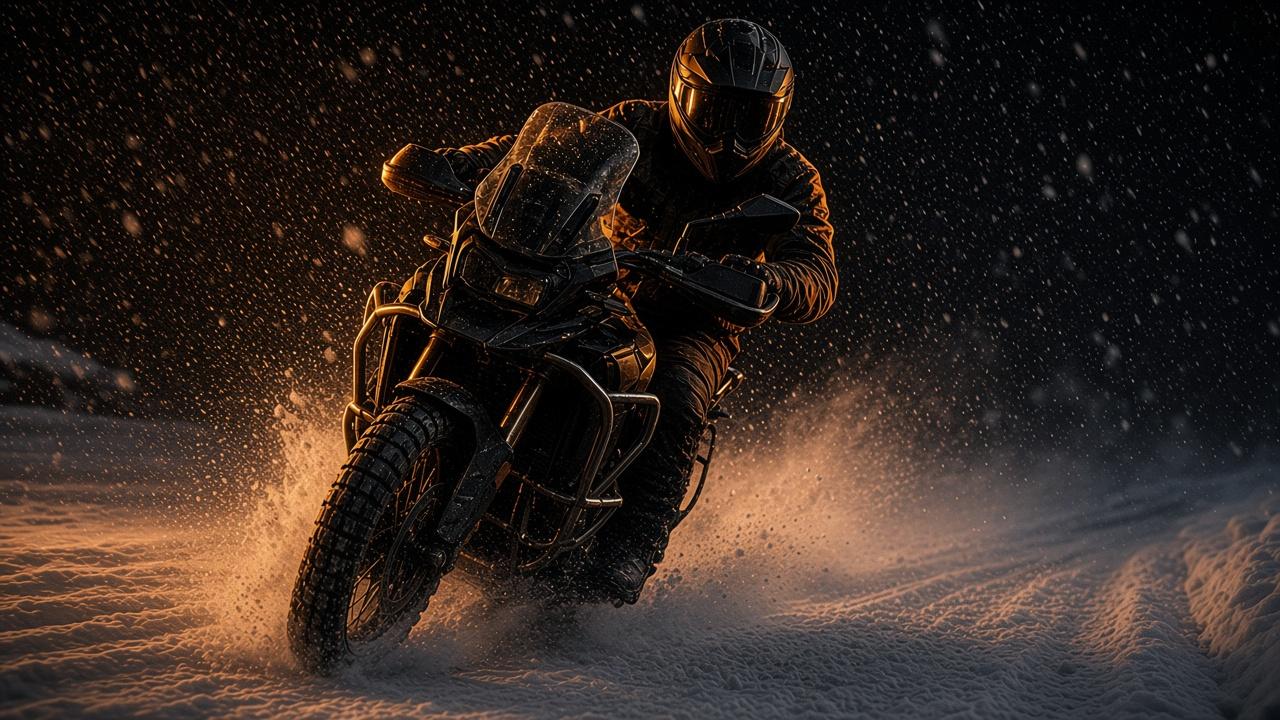
For most riders the first frost means the end of the season: the bike goes into the garage until spring. Some do not put it away. For one person it is the easier way to work, another is simply not ready to stop riding for half a year. Here is what the law says, and how to prepare yourself and the machine for the cold.
What the rules say
The traffic rules set no season for motorcyclists. They name neither a minimum temperature nor a minimum visibility at which riding is forbidden. In winter a rider goes out on the same terms as other drivers. A limit can apply only on a stretch where the matching sign stands. Common sense still applies: in a heavy snowfall or on ice, leave the motorcycle at home.
Preparing the motorcycle
Wind protection. The bigger the screen, the better. The aerodynamics suffer a little, but the wind will not blow the warmth away. Hand guards on the bars, a screen or muffs, are worth fitting too. Crash bars save both the plastic and your legs if the bike does go down on a slippery stretch.
Tyres. This is the main point. A summer tyre goes hard in the cold and almost loses its grip, so you need tyres that work at low temperatures. For snow and ice, a winter tyre, and if you often ride on ice, a studded one. More on studs in Estonia is below. A soft-compound tyre suits cold but clean asphalt. A race rain tyre is a poor winter choice: it needs a working temperature you will not reach in a frost.
The engine. In winter the engine may never reach its working temperature. Partly covering the radiator with a firm shield or a fabric apron helps, but do not block the airflow completely, and watch the temperature gauge. Check the coolant: it has to cope with frost. The battery is another important part. In the cold it loses charge quickly, so a charger with a maintenance mode is useful.
Heat. Heated grips help not only in winter, but in late autumn and early spring. A heated seat is warmer still: universal pads are sold that fit most motorcycles. Make sure the generator can carry the extra load.
Salt. Road chemicals eat metal quickly. Wash the motorcycle regularly, and treat the frame, the fasteners and the electrical connectors with an anti-corrosion product.
The kit
The best choice is a suit for low temperatures, one size up, so several layers fit under it. The onion principle works: a base layer, fleece or a thin down jacket, and a windproof and waterproof layer on top. If you want real warmth, there are heated vests, gloves and insoles.
The helmet needs a double visor or a Pinlock insert so the screen does not mist, and under it a warm balaclava. Choose tall insulated boots, with room for a thick sock: the feet get cold first. Waterproof overboots keep the slush out. Gloves should be long, with a wide cuff, so they cover the wrists and cold air does not blow up the sleeves.
In winter it gets dark early and fog is common, so make sure you can be seen. Reflective details on your clothes, or a vest, help, and so do working lights on the motorcycle.
How to ride safely
Start with a test loop. Before the trip, ride calmly down a quiet street. The tyres warm a little, and you feel how the road holds.
Keep to the right. On a slippery road the chance of falling is higher, so the further you are from the oncoming lane, the safer.
Go around the dangerous spots. It is especially slippery between lanes, on road markings, in the shade, on manhole covers, tram rails and the metal parts of bridges. On those stretches, do not brake hard and do not snatch the bars.
Ride in the packed track. Where cars have already been, there is usually less snow and ice.
Overtake only if you have to. Every crossing of the snow ridge between the tracks is an extra risk.
Leave a long gap. The stopping distance is longer in the cold, and the car ahead may brake hard or change lane.
Do everything smoothly. Use the throttle and the brakes gently, and take bends without a sharp lean. If the motorcycle has ABS and traction control, they earn their place in winter.
And in Estonia?
In Estonia studded tyres are allowed from 15 October to 31 March, and that period can be extended if the weather calls for it. The mandatory winter tyre from 1 December to 1 March applies to cars and trucks. Anyone who plans to ride a motorcycle on studs should check the tyre rules for their category with the Transport Administration (Transpordiamet) beforehand.
Winter riding is for people who have prepared. With the right tyres, warm kit and a careful way of riding, the season can last all year.
Id no. 62·…